Business observability, a superpower for making better decisions in real time.
Managers face many challenges and decisions every day. This is the main goal of a successful manager's daily work: taking responsibility for the best decisions to create as much value as possible for customers, increase their willingness to pay or buy, and optimize how the company operates.
Competition is becoming increasingly complex: customers have many options for meeting their needs, and the pace of change in the business environment continues to accelerate. The geopolitical landscape creates new scenarios more rapidly, and the speed at which technologies reshape competition is also difficult to predict.
Staying competitive therefore becomes a challenge that requires managers to make the best decisions with the information available. The issue is that there are ever more variables to analyze, from operations and key business indicators to external factors. The challenge is to correlate all this internal and external data in real time to obtain accurate information and continuously choose the best course of action.
What is business observability?
Business observability is the answer for leaders who want to make decisions based on evidence rather than intuition: correlating what happens inside the company in real time and adding signals from the wider environment—markets, customers and suppliers—that arrive through integrations and external sources. Business observability comes from the world of telemetry: instead of waiting for the month-end report, managers see the signals emitted by digital business processes in real time. As sources—systems, machines, sensors and cameras—are instrumented, each delivers its own pulse of information, which translates into operational and business indicators on a single dashboard. This is possible thanks to tools that use OpenTelemetry protocols, the de facto industry standard for telemetry and observability—a CNCF graduated project supported by leading platforms—which make it easier to instrument, capture, analyze and deliver real-time information about what is happening across a company's systems.
From operational signals to timely decisions
With this capability, the company stops looking backward: dashboards show what is happening now at each instrumented source, rather than what happened the previous week. Automated actions are configured on top of this real-time view: business rules and models applied to data that operations already generate. The system notifies the responsible leader as soon as a critical indicator moves out of range: a drop in conversion, a production bottleneck or an order at risk of missing its commitment. When the rule is clear and the risk is bounded, it executes the response without waiting for human intervention. The result for managers is tangible: less time reconstructing what happened and more time deciding, with clear information to make the most appropriate decisions while outcomes can still change. This helps the company compete more effectively and deliver greater value to customers.
Business observability in logistics
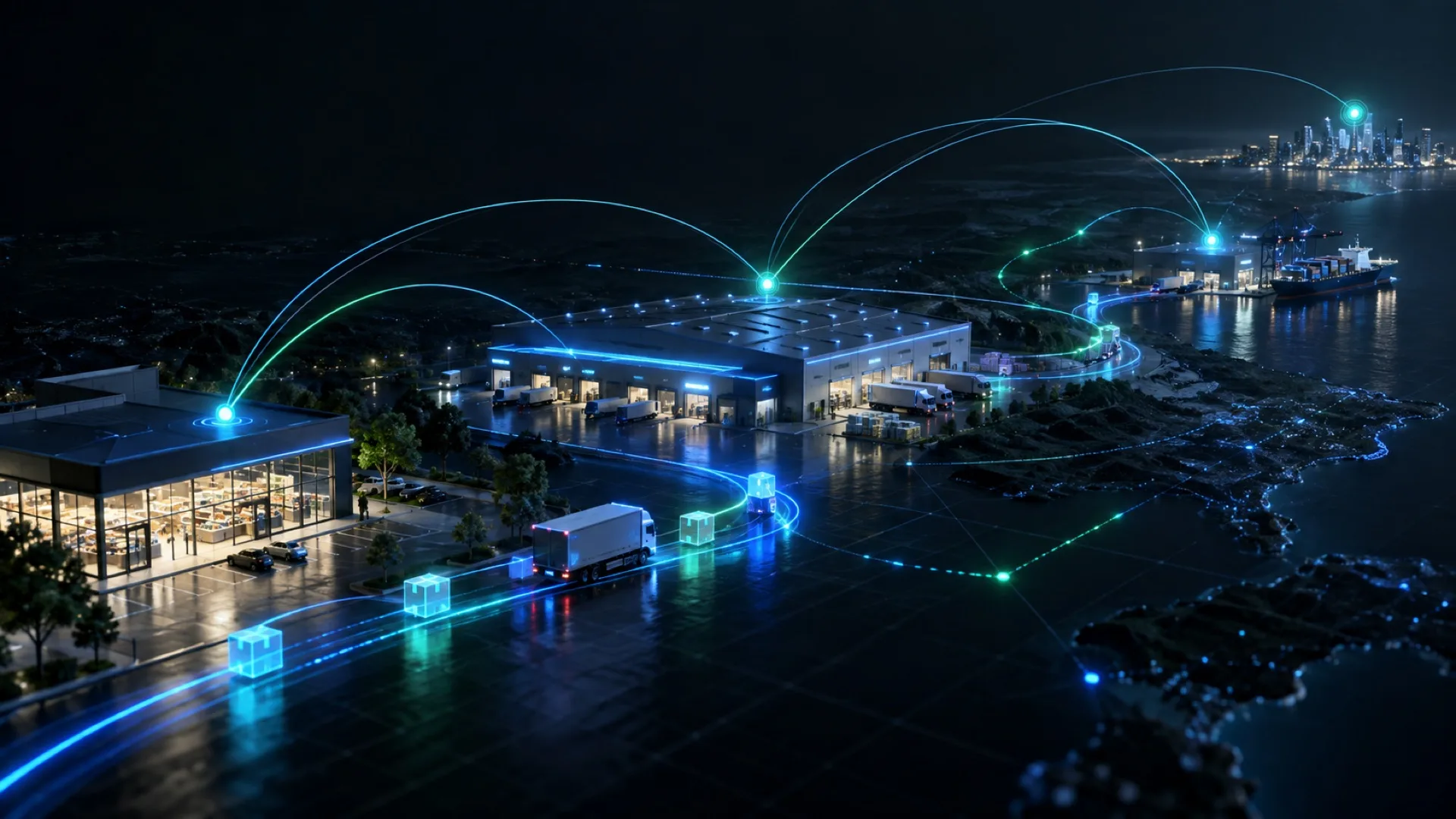
A logistics example: a distribution operation promises same-day delivery, but the manager only learns whether it delivered on that promise the following day, when the report shows missed orders and customers are already unhappy. With business observability, the sources the operation already has—the transportation management system, fleet GPS, warehouse scanners and cold-chain temperature sensors—are instrumented, and their signals are correlated with the commercial promise made for each order. When a vehicle has been stationary for forty minutes and that delay puts three afternoon deliveries at risk, the coordinator receives an alert while there is still time to reassign the route or notify the customer before they call to complain. The benefit is measured in delivery commitments met, fewer penalties and a service customers perceive as reliable, rather than in more reports.
Business observability in customer experience
A customer experience example: a customer's purchase journey crosses several systems—the app, website, product search engine, payment gateway and support chat—and each is measured separately. When sales fall, no one knows where the customer was lost. By instrumenting the entire journey, the company sees the actual funnel in real time: how many customers reach payment, how many complete it and how long each stage takes. If a bank's payment gateway starts responding slowly and declined payments rise from 1 to 9 percent, an alert arrives within minutes and the team immediately routes transactions to another provider, instead of discovering the problem the next day when the sale has already been lost. The benefit is twofold: sales recovered the same day and customers who experience no friction because the problem was resolved before most of them noticed.
Where to start
Ultimately, what separates one company from another is not how much data it produces, but how long it takes to turn that data into decisions. Every digital operation already emits signals; the question for managers is whether they listen while they can still act, or learn about them once the outcome is already settled and all that remains is to explain it. That gap between what happens and what is known is now one of the highest and least visible costs of any business, because while one competitor reconstructs the past, another has already corrected course. Business observability does not promise certainty or replace a leader's judgment: it gives them back the time to exercise it. Start with a critical process, instrument the sources you already have, and assess which decisions you would have made if you had known in time. The competitive advantage of the coming years will belong not to those with the most information, but to those who use it sooner.
Explore business observability in practice
Learn about the technical foundations in our article on data instrumentation and observability, and explore how they support retail operations in the Homecenter observability success story.